
Presentation of Results: Methods and Tools to Educate for Sustainable Development
04/30/2026 Francisco Alacio
The EDUS project brought together organisations from different European countries to support the work of vocational education and training (VET) trainers, providing them with a comprehensive methodology and practical resources to embed education for sustainable development into their programmes.
As a result, trainers strengthened their sustainability skills and helped learners progress in acquiring key knowledge and abilities to promote sustainable development, in line with the goals set out in the 2030 Agenda.
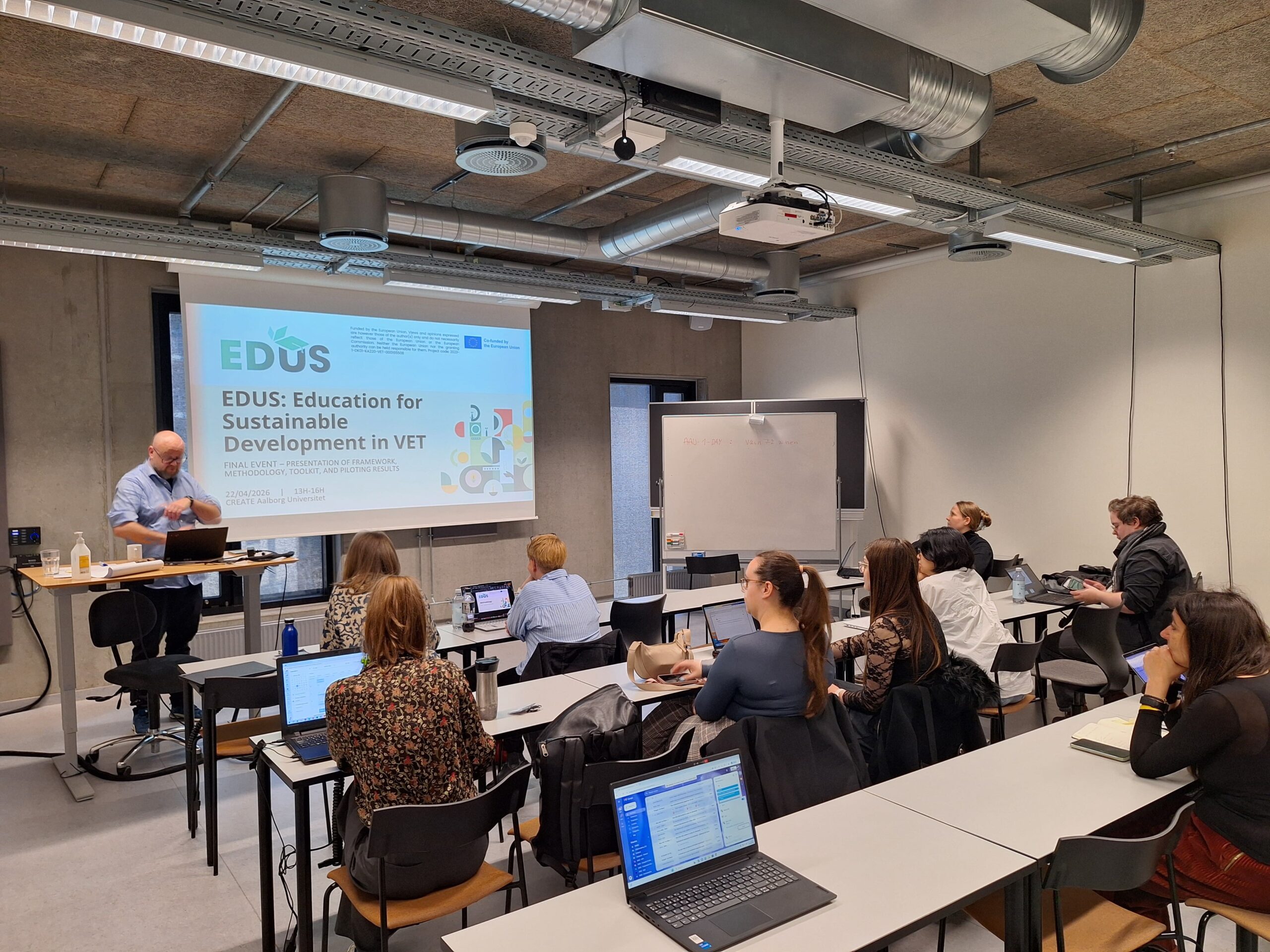
During the event, the results of the EDUS project were presented, while tools, methodologies and practical experiences developed throughout its implementation were also shared.
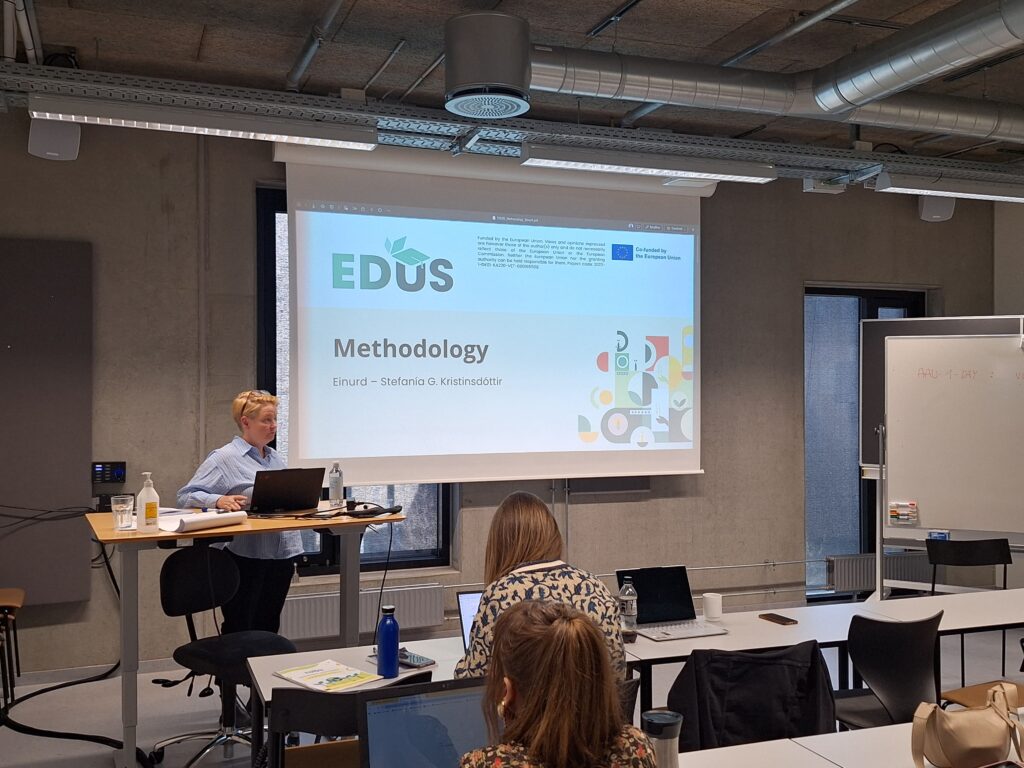
One of the main priorities was to bring these resources to those working directly in the classroom, making them easier to use in real-life contexts and helping to equip people with key skills for a more sustainable future.
The event also became a space for shared reflection, where education professionals exchanged views on the learning generated, as well as on the strengths and challenges identified during the project’s implementation.
One of EDUS’s greatest strengths has been its proposal for addressing sustainability in a gradual and structured way. The project is based on the idea that learning develops in different stages: beginning with understanding the concept, moving on to recognising its relevance and, finally, putting it into practice in real-life contexts.
In this way, learners do not remain solely at the theoretical level, but acquire useful skills that they can apply in both their personal and professional lives. The project also emphasises that these competences should go hand in hand with teachers’ own development, reinforcing their role as key agents in the educational process.
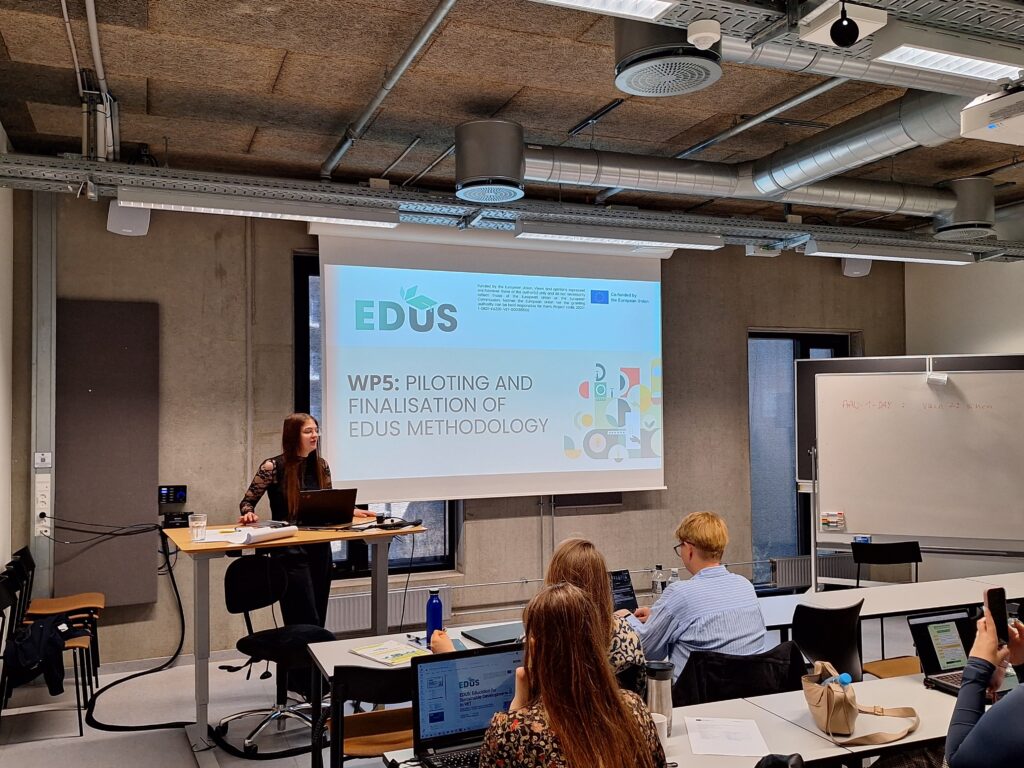
In terms of resources, the event presented the toolkit developed as part of the project, one of its most significant outcomes. This set of materials is designed to support teachers in their day-to-day work and encourage more active student participation. Among other elements, it includes a framework aimed at facilitating the integration of sustainability into the classroom within the wider educational community.
Its strengths include a clear and flexible modular structure; tools that promote the joint creation of content between teachers and students; the use of artificial intelligence to design activities; and self-assessment templates for both learners and teachers, focused on key competences linked to sustainability. All of this encourages a shift in classroom practice, with teachers adopting a more supportive and collaborative role.
From a methodological perspective, EDUS promotes learning that is connected to reality, combining different approaches. These include working on real sustainability-related problems, co-creating content during sessions, and adopting a practical approach based on experimentation and direct application. The aim is for sustainability to stop being an abstract concept and become part of the way people learn and act.
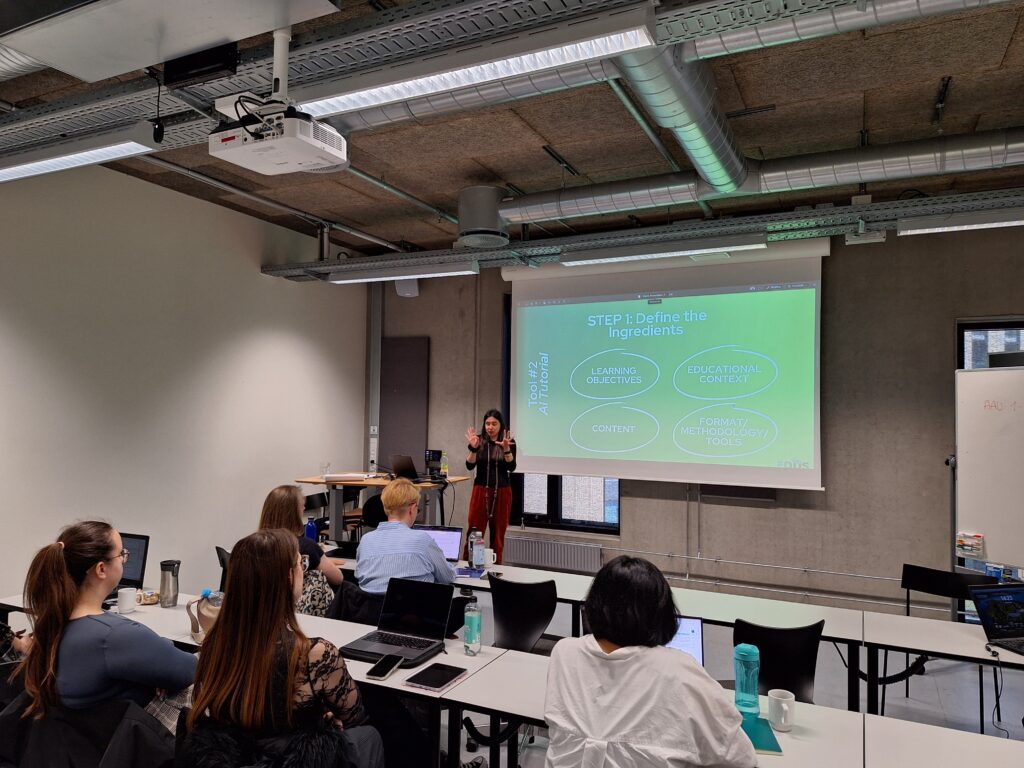
Another key element of the project has been its piloting phase in different countries and educational contexts. This stage made it possible to test both the tools and methodologies in real situations, analysing their impact on teachers and learners. During the event, the results of these experiences were shared, highlighting both the achievements and the difficulties encountered, which helped to refine and improve the resources for implementation in different settings.
The event held on 22 April made it possible to share all these advances and continue promoting a more dynamic, collaborative educational model focused on the challenges of the future.